|
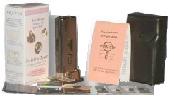
Most Fertile Days Every woman’s most fertile days differ from one to the next. It truly depends on the woman’s cycle, whether it be 28, 30, 35 days or more as to when she ovulates. For women with a 28-day cycle, the 14th day is often when ovulation occurs. Let's side track a little here. Knowing how long your cycle is and counting backwards is the best way to "guesstimate" when ovulation "might" occur if you have a 10-14 day luteal cycle. What that means is that it may be a long time from the beginning of your monthly cycle to ovulation but it can only be so long from ovulation until your period comes again. THAT part of the cycle is reasonably measurable. It is not always 14 days but will not be more than 18 days (almost always) without pregnancy having occurred. An example of this is that a woman with a 70 day cycle could count back wards and know that she most likely ovulated between day 56 and day 60. A woman with a 25 day cycle, most likely ovulated between day 11 and day 15. This is generally speaking of course. During this fertility rising time your cervical mucus will change. Your cervical mucus increases in volume as estrogen levels begin to rise. The role the increased mucus plays is to nourish, protect and speed the sperm on its way up through the uterus to the egg. The most fertile days for any woman are during the period spanning one to two days before ovulation to about 24 hours after ovulation has occurred. The reason for this is that the egg only survives between 12 and 24 hours after it has been released. If you have intercourse just prior and during ovulation, the chances of your getting pregnant are optimal. These can be considered your most fertile days of the month. If you have intercourse during your most fertile days of the month and you are a healthy woman with no reproduction problems, you have a 25% chance of getting pregnant each month. You can increase your chances of getting pregnant by pinpointing exactly when it is that you ovulate. You can also use this knowledge as a form of natural birth control to avoid pregnancy. Help Determining Your Most Fertile Days If all of this sounds confusing and you simply are having trouble determining when your most fertile days take place, then you should consider getting a fertility monitor. A fertility monitor can accurately pinpoint when it is that you ovulate up to 98%. There are two types of fertility monitors on the market, one that tests your urine for LH levels and one that tests the estrogen levels in your saliva. The latter type is the most convenient to use. |
Find the Fertility Tracker, OvaCue Monitor + Other Fertility Products in our Store
         Fertility Tracker $44.95 |